
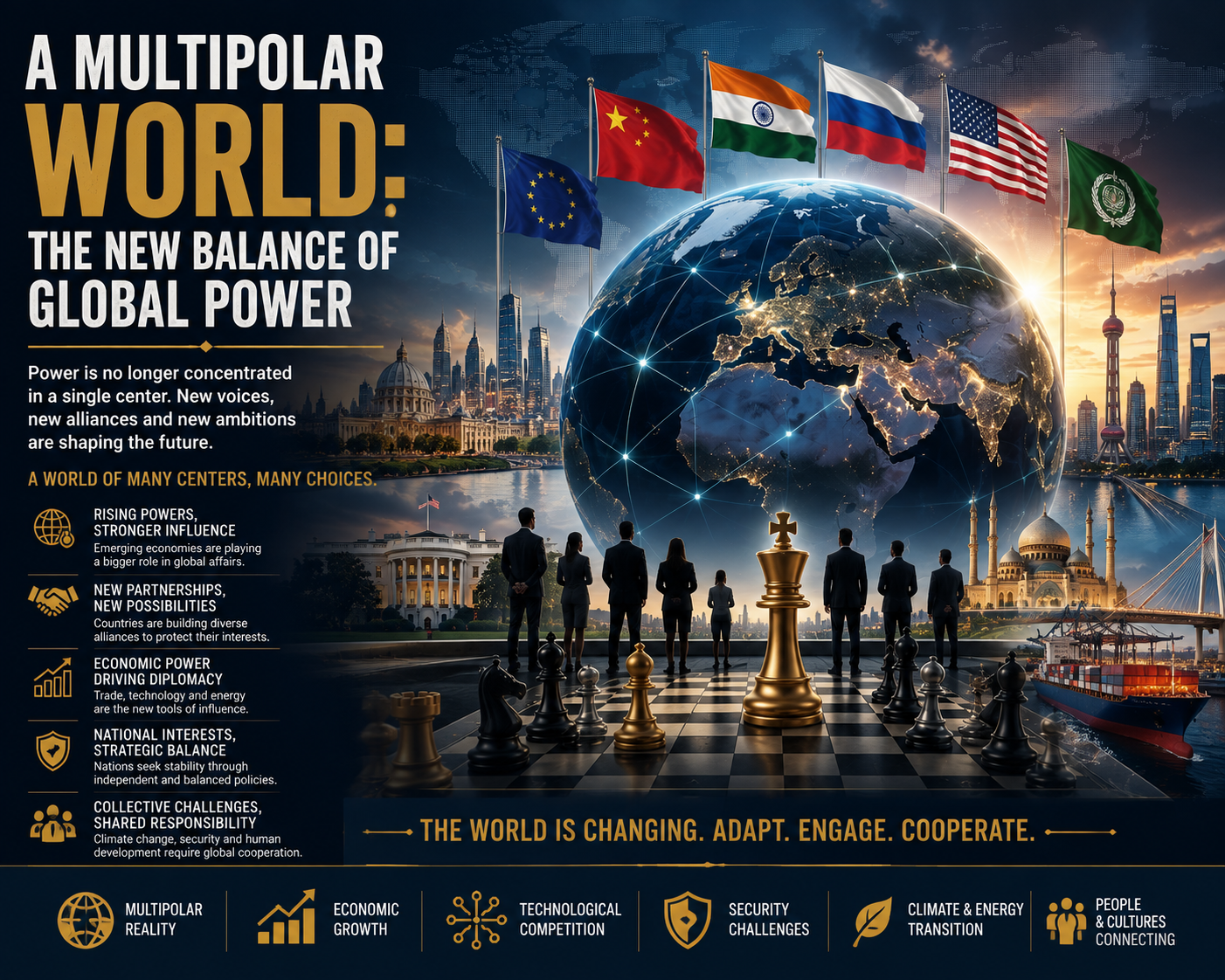
The international system is changing.For several decades, global politics was often described through the dominance of a small number of major powers.Today, influence is becoming increasingly distributed.China has emerged as a major economic and strategic actor.India is expanding its international role, while countries in the Gulf, Asia, Africa and Latin America are seeking greater influence.
This does not necessarily mean that traditional Western powers are disappearing.The United States and Europe continue to possess enormous economic, technological and diplomatic strength.However, they increasingly operate within a more competitive international environment.Middle powers are also becoming more important.Countries are developing partnerships with multiple global actors instead of relying exclusively on one alliance.Economic diplomacy is central to this new environment.
Trade, technology, energy and infrastructure now play roles previously associated mainly with military power.Global institutions will also face growing pressure to reflect changing realities.Emerging countries increasingly demand a stronger voice in international decision-making.For developing countries such as Pakistan, a multipolar system presents both opportunities and risks.More international partnerships can create greater diplomatic flexibility.
At the same time, rivalry between major powers can place smaller states under pressure.The most effective strategy is therefore balanced diplomacy based on national interests.The future world order will probably not be controlled by a single centre of power.Instead, international politics will involve negotiation between multiple powerful states and regional blocs. Understanding this transition will be essential for successful foreign policy.
